Piraeus Port to Athens: Ferry and Cruise Transfer Guide
Getting between Piraeus port, central Athens and the airport by metro, train, taxi or private transfer, with timing tips for ferry and cruise passengers.
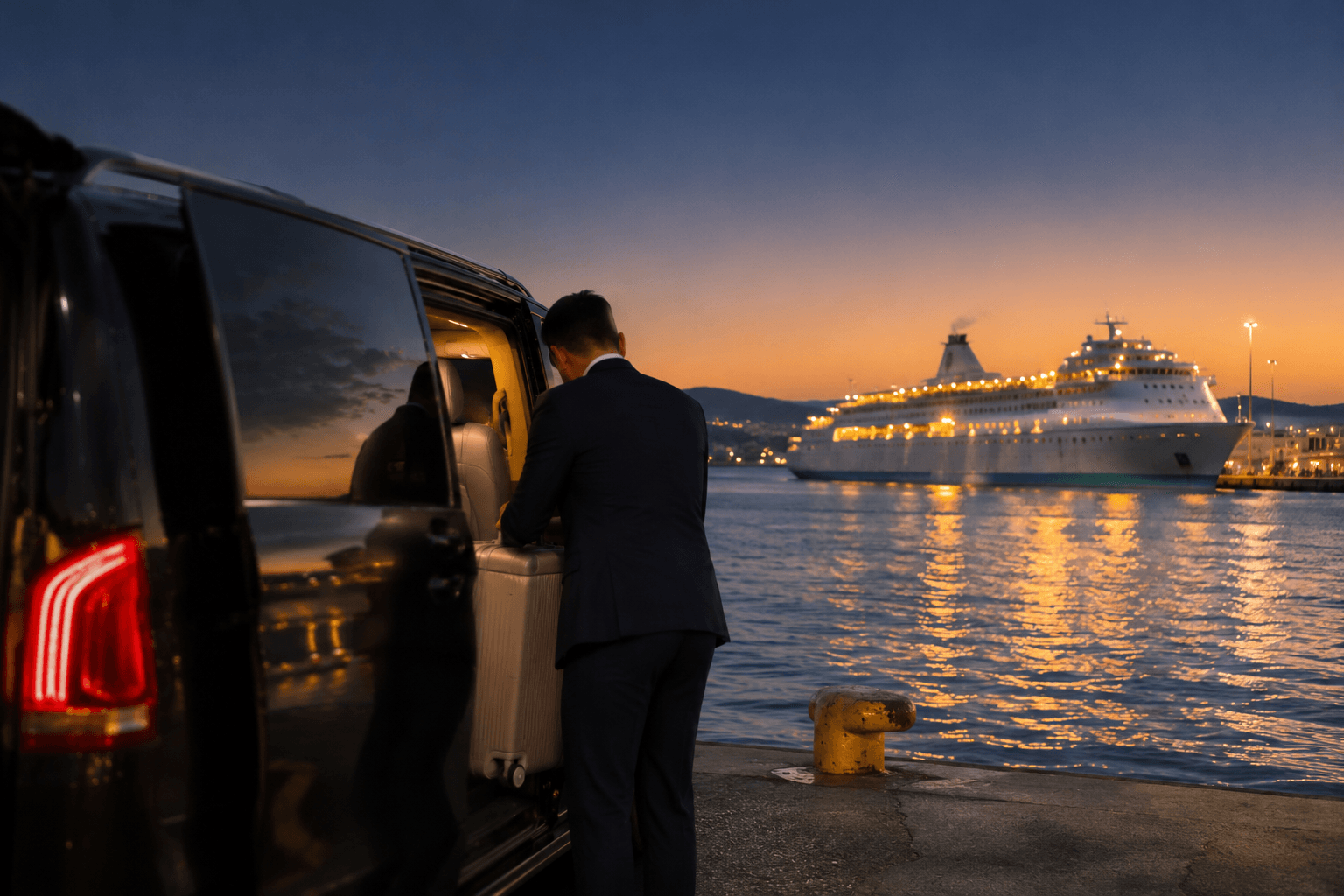
Piraeus is the main port of Athens and one of the busiest passenger ports in the Mediterranean. Ferries leave here for the Saronic islands, the Cyclades, Crete, the Dodecanese and beyond, and it is also the city’s principal cruise port. Whether you are arriving from the islands, catching a flight home or making a cruise call, a little planning makes these connections much smoother.
Where Piraeus is and how long it takes
Piraeus lies on the Saronic Gulf, roughly 10–12 km southwest of central Athens. By road, the drive to Syntagma or Plaka usually takes around 25–45 minutes, depending on traffic and on which part of the port you start from.
The drive between Piraeus and Athens International Airport is longer, as the airport is on the opposite side of the city. Allow around 45–75 minutes, and more at weekday peak times or when several large ships are in port at once.
Understanding the port layout
The single most useful thing to know about Piraeus is that it is large. The passenger harbour is spread along several kilometres of waterfront and divided into numbered gates, each serving particular routes and ferry companies. Ferries to Crete, for example, may depart from a different area than boats to the Saronic islands, and the cruise terminals are in their own section of the harbour.
Before you travel, check your ticket or booking confirmation for the departure gate, or ask your ferry company. Walking between distant gates with luggage can take longer than expected. If you are being collected, sharing the gate number and the name of your vessel with your driver makes the meeting far simpler.
Your options between Piraeus and Athens
Metro
Metro line 1 (the green line) runs from Piraeus station, near the main ferry area, through Monastiraki and Omonia and on to the northern suburbs. It is the traditional way into the centre and avoids road traffic. Metro line 3 (the blue line) also reaches Piraeus, giving a direct rail link to the city centre and on to the airport, although the full journey to the airport is long.
Suburban railway
The suburban railway connects Piraeus with central Athens and the airport, among other destinations. It can be a useful alternative to the metro for longer trips across Attica.
Taxi
Taxi ranks are found near the main passenger areas and the cruise terminals. When several ferries arrive together, queues can be long.
Private transfer
A pre-arranged driver can meet you at an agreed point near your gate or terminal and take you directly to your hotel, the airport or onwards to another part of Greece. For groups, a V-Class van or a VIP Sprinter minibus keeps everyone and their luggage in one vehicle, which is often easier than coordinating several taxis.
Timing a transfer around ferry arrivals
Ferries are generally punctual, but arrival times can shift with sea conditions, particularly on longer routes and in windy weather. A few principles help:
- Check the expected arrival on the day. Ferry companies and port websites usually update arrival times, and you can share any changes with your driver.
- Allow time to disembark. On large ferries, passengers with cars and heavy luggage can take a while to leave the ship. Count on some minutes between docking and reaching the quay.
- Build a generous buffer for flights. If you are going straight from a ferry to the airport, leave plenty of margin between your scheduled arrival in Piraeus and your flight. A late ferry combined with heavy traffic can quickly use up a tight connection.
- Arrive early for departures. Ferry companies typically ask passengers to be at the gate well before sailing, and boarding closes some time before departure. Factor in the drive and the walk to your gate.
Cruise passengers
If your ship calls at Piraeus for the day, central Athens is close enough to visit the Acropolis, the Acropolis Museum and Plaka in a few hours. The key is to keep a firm eye on your all-aboard time and to allow for traffic on the way back. A driver who waits for you between sights can make a short visit more efficient, and Athenian VIP Transfers also runs private tours with a driver for cruise passengers who want to make the most of a port day. For those beginning or ending a cruise in Athens, a transfer between the airport, a hotel and the cruise terminal is a common and straightforward arrangement.
Rafina and Lavrio
Athens has two further passenger ports on the east coast of Attica. Rafina is closer to the airport than Piraeus, typically around 20–30 minutes by road, and is a convenient departure point for some of the Cyclades, such as Andros, Tinos and Mykonos. Lavrio, further south near Cape Sounion, serves Kea and a number of other islands. From central Athens, allow roughly 45–75 minutes by road to either port, depending on traffic. Neither is as well served by public transport as Piraeus, so a taxi or private transfer is often the practical choice.
A few practical tips
Keep your ferry tickets, printed or on your phone, easy to reach as you approach the gate, and carry water in summer. If you are arriving in Athens by air before heading to the port, our guide to getting from Athens Airport to the city centre covers the first leg of the journey.
Plan your journey
Whether you are catching a morning ferry, connecting from the islands to a flight or joining a cruise, you can request a transfer between Piraeus, Rafina or Lavrio and anywhere in Athens. Share your vessel, gate and timings so the pickup can be arranged around your sailing.